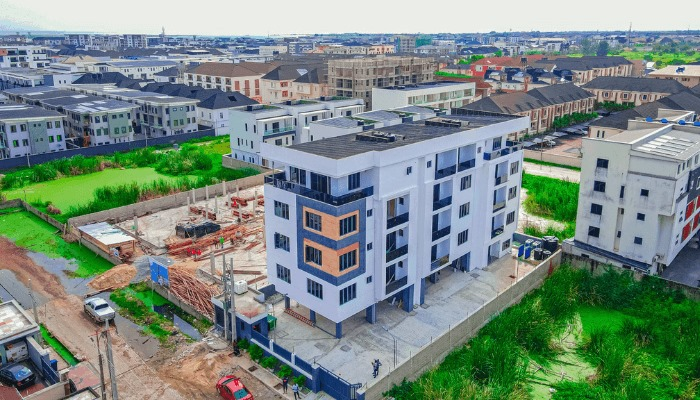
In today’s Nigeria, conversations about wealth creation often drift toward trending options—cryptocurrency, tech startups, e-commerce, and even the stock market. While these platforms have their merits, none has proven to be as time-tested, secure, and rewarding as real estate. For generations, Nigerians have leaned on property as the backbone of wealth, and the reasons remain clear: land is finite, demand for housing is ever-rising, and real estate offers a hedge against inflation like no other asset class.
There is an age-old saying: “Buy land, they’re not making it anymore.” In Nigeria, this is more than just a cliché—it is reality. Population growth continues at an explosive pace, with over 230 million people and projections to surpass 400 million by 2050. This expansion naturally fuels the demand for land and housing. Unlike other investments that can vanish with a market crash, land retains intrinsic value because of its scarcity. Owning land in Nigeria is therefore not only a status symbol but also a lifelong security. Property is viable for many reasons:
- Real Estate as a Hedge Against Inflation:Nigeria’s economy is not immune to inflation. Prices of goods and services continue to climb, and the naira’s purchasing power weakens by the year. Yet, while money in the bank loses value, property appreciates. Take Lagos, for example: land bought in Lekki Phase 1 for less than ₦10 million two decades ago is now worth hundreds of millions. Similarly, Abuja’s Gwarimpa or Port Harcourt’s GRA has seen consistent, exponential growth. Real estate protects investors from inflation while also multiplying wealth.
- Passive Income and Cash Flow Opportunities:
Another reason real estate remains Nigeria’s most reliable path to wealth is the opportunity it provides for passive income. Rental properties, both residential and commercial, generate steady monthly or annual cash flow for landlords. With urban migration increasing, young professionals, students, and families are constantly in search of housing. For investors, this creates a perpetual market.In addition, short-let apartments and serviced rentals—popularized by platforms like Airbnb—have opened fresh streams of income. Property owners can earn significantly more from short-term rentals compared to traditional rent, especially in cities like Lagos and Abuja. - Security and Legacy for Future Generations:
Unlike volatile digital assets or speculative stocks, real estate offers something Nigerians value deeply: security and legacy. Land and houses can be passed down from generation to generation, becoming a family’s enduring wealth. In cultures where inheritance and family pride are paramount, real estate is a gift that keeps giving. It allows families to remain financially stable, even in uncertain times. - Real Estate as a Driver of Empowerment and Job Creation:
Real estate in Nigeria is not just about individual wealth. It is a driver of national growth and empowerment. The sector creates millions of jobs—from architects and surveyors to artisans, marketers, and developers. Companies like the PWAN Group/PWAN Max have pioneered innovative models that empower ordinary Nigerians to become landowners and real estate entrepreneurs. Through cooperative societies, referral networks, and flexible payment options, real estate has shifted from being a preserve of the elite to an open door for the everyday person. - The Versatility of Real Estate Investment:
Real estate in Nigeria offers different investment entry points for people at various financial levels: - Land Banking: Buying undeveloped land in emerging areas, holding it as the community grows, and reselling at a higher value.
- House Flipping: Renovating distressed properties and selling for profit.
- Rental Income: Building or purchasing homes for long-term rental.
- Commercial Real Estate: Investing in shops, warehouses, or office complexes.
- Real Estate Investment Trusts (REITs): For those who prefer a lower entry cost, REITs allow investors to pool resources and share profits.
This versatility makes the sector suitable for everyone, whether you’re a young graduate, a middle-class professional, or a high-net-worth individual.
Regardless, real estate in Nigeria has its challenges: land disputes, fraud, inconsistent documentation, and poor infrastructure in certain areas. But these risks can be minimized through due diligence. Engaging registered surveyors, working with trusted real estate companies, and verifying titles with the appropriate government agencies provide the needed protection. More so, new government policies around digital land registries and urban planning are gradually addressing these challenges, making the sector safer for investors.
The Future of Real Estate in Nigeria
Looking ahead, the potential of real estate in Nigeria is massive. The housing deficit currently stands at over 20 million units, which means the demand far outweighs the supply. Urbanization continues to expand cities, and infrastructure projects like the Lagos–Ibadan Expressway, the Lekki Deep Sea Port, and the Abuja–Kaduna railway are opening new corridors of growth. Technology, too, is reshaping the landscape with proptech platforms that simplify property searches, transactions, and financing.
All these factors point to one undeniable truth: the best time to invest in Nigeria’s real estate is now. Every year you wait, prices climb, and opportunities slip away.
Consequently, while other investment avenues may promise quick returns, they often come with significant risks. Real estate, on the other hand, stands as Nigeria’s most reliable path to wealth because it is rooted in tangible assets, long-term growth, and generational security. From land banking to rentals, from urban centers to emerging towns, opportunities abound for those who are ready to act.
For Nigerians seeking financial stability, independence, and prosperity, real estate is not just an option—it is the foundation of lasting wealth.